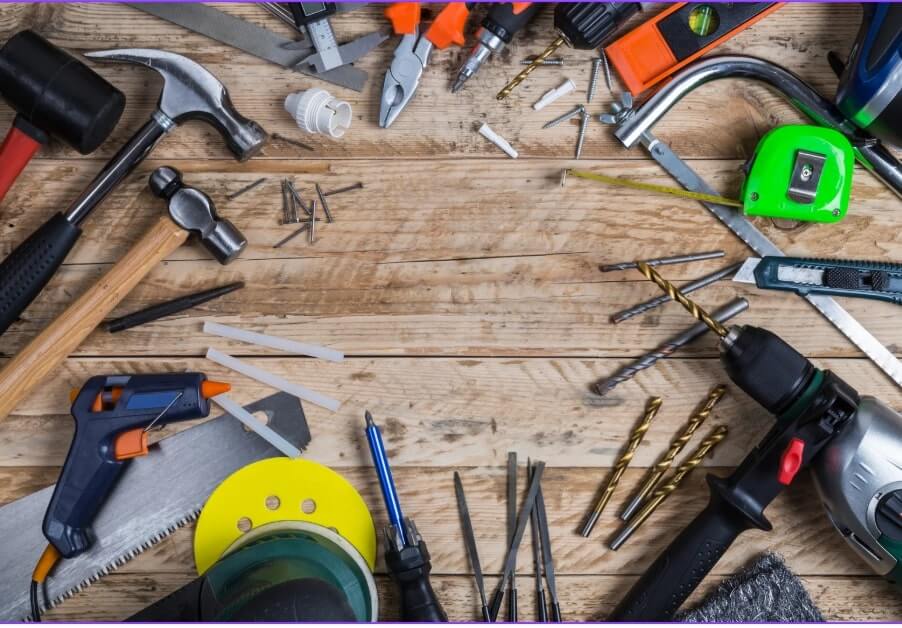
Quick OverviewA DIY (Do-It-Yourself) toolkit is a collection of essential hand tools, power tools, and safety equipment that empowers homeowners to tackle home projects efficiently, safely, and creatively. From fixing taps to building furniture, having the right tools saves time, money, and effort.This blog will walk through:✅ Must-have hand tools like hammers, screwdrivers, pliers, and tape measures✅ Power tools such as drills, jigsaws, circular saws, and sanders✅ Essential safety gear for protecting eyes, hands, ears, and lungs✅ Measuring, marking, and precision tools for accurate DIY work✅ Storage solutions and organisation tips for a tidy, efficient workspace✅ Specialty tools for advanced DIY projects and creative tasks
Whether you’re fixing a leaky tap, assembling flat-pack furniture, or building a garden shed from scratch, the right tools make all the difference. For any homeowner, having a well-equipped toolbox isn’t just convenient—it’s essential.
DIY (Do-It-Yourself) projects can save money, offer creative satisfaction, and give you greater control over your home. But before you jump into sawing, drilling, or hammering, it’s important to know which tools are worth investing in.
This guide breaks down the must-have hand and power tools every DIY enthusiast should own, covering their uses, why they matter, and how to choose the right ones for your needs.
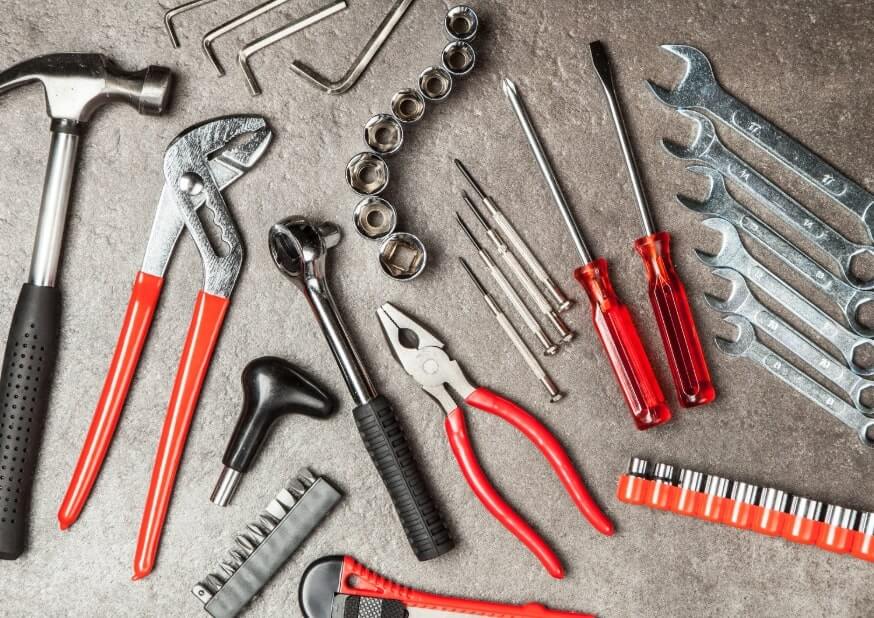
The Core Hand Tools Every Home DIYer Needs
Hand tools are the foundation of any toolkit. They’re simple, versatile, and essential for most small- to medium-sized tasks.
1. Hammer
- Use: Driving nails, removing nails, light demolition work.
- Tip: Choose a claw hammer with a comfortable grip and balanced weight.
2. Screwdrivers
- Use: Tightening and loosening screws on furniture, fixtures, and electronics.
- Tip: Get a set with various heads (Phillips, flat-head, Torx) or invest in a multi-bit screwdriver.
3. Adjustable Spanner (Wrench)
- Use: Loosening or tightening bolts, nuts, and pipe fittings.
- Tip: A medium-sized adjustable spanner is perfect for general use.
4. Tape Measure
- Use: Measuring for cutting, hanging, or positioning objects.
- Tip: Look for a retractable, lockable tape that’s at least 5 metres long.
5. Utility Knife (Box Cutter)
- Use: Cutting through cardboard, carpet, drywall, or packaging.
- Tip: Choose one with replaceable blades and a safety lock.
6. Pliers
- Use: Gripping, twisting, pulling, and cutting wires.
- Tip: Have a combination of needle-nose, cutting, and groove-joint pliers.
7. Allen (Hex) Key Set
- Use: Assembling furniture and adjusting certain machinery or appliances.
- Tip: A folding set or L-shaped keys with metric and imperial sizes are best.
Power Tools That Take Your Projects to the Next Level
Power tools save time and effort when it comes to more demanding DIY jobs. While they require a bit of skill, they’re indispensable for any serious home improver.
1. Power Drill / Driver
- Use: Drilling holes, driving screws, mixing paint or plaster.
- Tip: Invest in a cordless drill with variable speeds and a hammer function for masonry.
2. Jigsaw
- Use: Making curved or straight cuts in wood, plastic, and metal.
- Tip: Choose a jigsaw with adjustable speed and a tool-free blade change system.
3. Circular Saw
- Use: Straight, precise cuts in large wood pieces. Ideal for building furniture or flooring.
- Tip: Look for models with depth and bevel adjustment.
4. Sander (Orbital or Palm)
- Use: Smoothing wood, removing old paint, prepping surfaces.
- Tip: Get a random orbital sander for versatility and a dust collection feature.
5. Work Light or Headlamp
- Use: Illuminating dark corners or night-time work areas.
- Tip: LED work lights with adjustable angles are best for hands-free lighting.
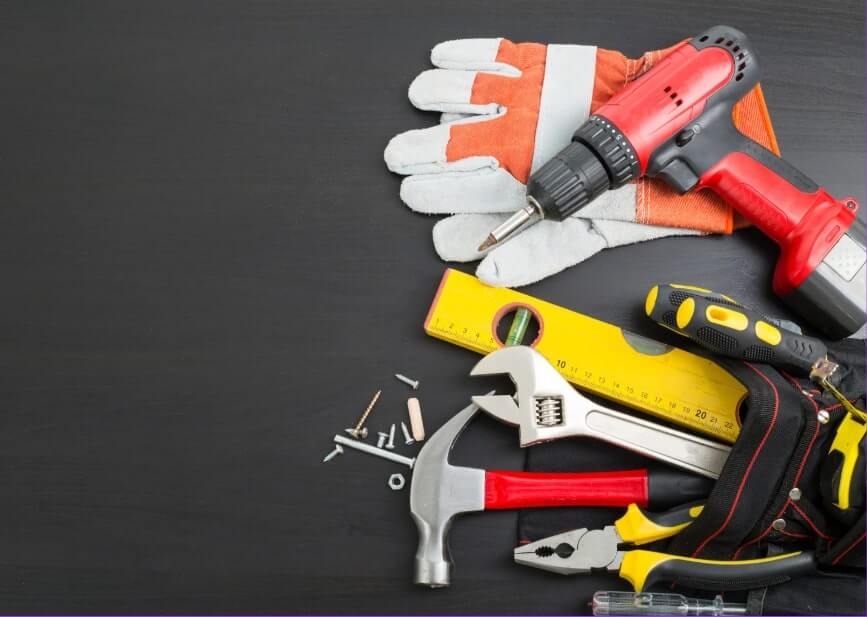
Safety Gear: Don’t DIY Without It
DIY projects can be rewarding—but they come with risks. Investing in basic safety equipment is non-negotiable.
Must-Have Safety Gear:
✔ Safety Glasses or Goggles – Protect eyes from dust, debris, and splinters.✔ Gloves – Choose work gloves that provide both protection and grip.✔ Dust Mask or Respirator – Essential when sanding, sawing, or painting.✔ Hearing Protection – Ear defenders or plugs if you’re using loud tools.✔ Knee Pads – Useful for flooring work or gardening.
💡 Tip: Keep a first-aid kit in your DIY area—just in case.
Essential Measuring & Marking Tools
Precision matters in DIY. Whether you’re building shelves or cutting timber, accurate measuring and marking tools help you get clean, straight results.
Must-Haves:
✔ Spirit Level: For levelling shelves, pictures, and installations.✔ Combination Square: Ensures precise right angles in woodworking.✔ Chalk Line or Laser Level: Perfect for marking long, straight lines.✔ Pencil & Marking Gauge: Always have a carpenter’s pencil in your toolbox.
💡 Tip: Double-check all measurements before cutting—“Measure twice, cut once.”
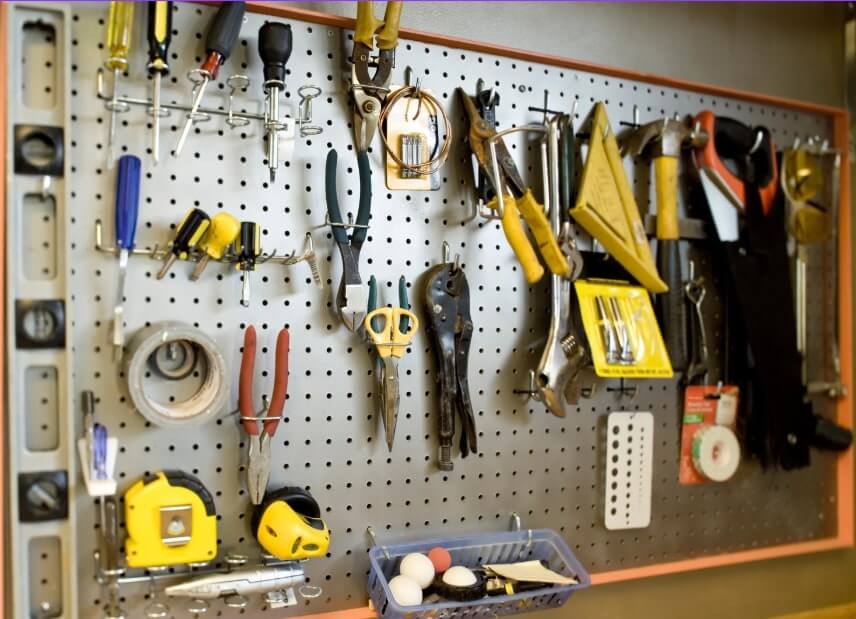
Storage & Organisation Tools
A disorganised workspace slows you down and increases the risk of accidents. A tidy tool setup helps you work faster and smarter.
Handy Storage Solutions:
✔ Toolbox or Tool Bag – Keeps hand tools portable and organised.✔ Wall Pegboard or Hooks – Ideal for frequently used tools.✔ Storage Drawers or Bins – Store small parts like screws, nails, and bits.✔ Label Maker or Dividers – Helps quickly identify what’s where.
💡 Tip: Clean tools after use and store them in a dry place to prevent rust.
Specialty Tools for DIY Enthusiasts
As your skills grow, so will your tool collection. These tools are not essential for beginners but become useful for more complex projects.
Examples of Advanced DIY Tools:
✔ Stud Finder – For locating studs behind walls before drilling.✔ Multitool (Oscillating Tool) – For sanding, cutting, scraping in tight spaces.✔ Rotary Tool (e.g., Dremel) – For detailed sanding, engraving, polishing.✔ Digital Caliper – For precise measurements of small parts.✔ Heat Gun – Great for paint stripping, thawing pipes, or DIY electronics.
Final Thoughts
Having the right tools is the first step toward DIY success. A well-rounded toolkit—complete with hand tools, power tools, safety gear, and storage solutions—makes every project more efficient, safer, and more enjoyable.
🚀 Key Takeaways:✔ Start with essential hand tools like hammers, screwdrivers, and pliers.✔ Invest in power tools as you take on more ambitious projects.✔ Always prioritise safety with protective gear.✔ Stay organised with smart tool storage systems.✔ Build your collection based on your needs and experience level.
Whether you’re hanging a picture frame or building a garden deck, having the right tools makes the job smoother—and way more satisfying. 🔧🏠
Ready to take your DIY skills to the next level? Build your toolkit and start creating today! 💪🛠️
← Previous
Extraordinary Living Room Decor Ideas That'll Make You Want to Redecorate
Next →
Unique Handmade Gift Ideas: Handmade Gifts That Anyone Can Make!

About the Author
HTTHQ0rwX6rU4Qk
Professional educator and content writer at StudyMate Central, helping UK professionals advance their careers.